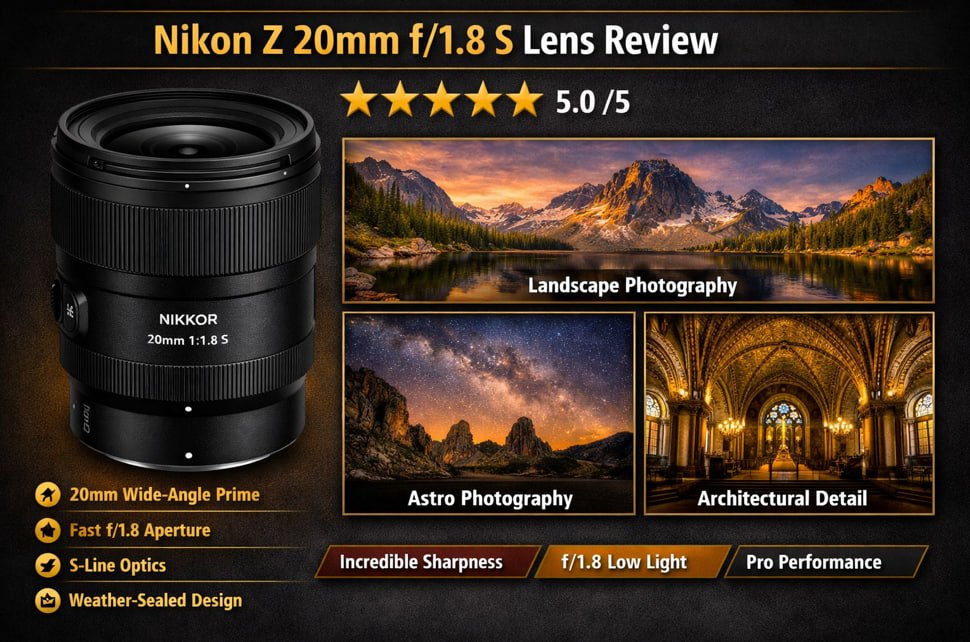
Nikon Z 20mm F/1.8 S For Astrophotography buyers should prioritize measurable performance, real-world handling, and value before making a final decision.
For photographers seeking to capture breathtaking night skies or expansive, immersive landscapes, the Nikon Z 20mm f/1.8 S lens emerges as a compelling choice in 2026. This review delves into the performance of the Nikon Z 20mm f/1.8 S for Astrophotography, exploring its optical prowess, autofocus capabilities, and overall value for enthusiasts and professionals alike. If you’re looking to elevate your wide-angle game, especially in low-light conditions, this lens warrants serious consideration.
Key Takeaways
- Nikon Z 20mm f/1.8 S for Astrophotography: Is this ultra-wide prime the ultimate lens for capturing the night sky and expansive landscapes in 2026? Discove
- focal_length: 20mm
- aperture: f/1.8
- mount: Nikon Z
Quick Answer – Nikon Z 20mm F/1.8 S For Astrophotography
This ultra-wide prime excels at astrophotography and landscapes. It delivers exceptional sharpness and low distortion, though its price point may be a consideration for some.
Optical Excellence and Image Quality
The Nikon Z 20mm f/1.8 S boasts an impressive optical construction designed to minimize aberrations and maximize sharpness, even at its wide f/1.8 aperture. This is crucial for astrophotography, where capturing faint stars and nebulae demands the best possible light-gathering and detail rendition. Expect minimal coma and chromatic aberration, ensuring stars remain pinpoint sharp and colors are rendered accurately across the frame. For landscape photographers, the edge-to-edge sharpness and pleasing bokeh contribute to stunning, detailed images.
Autofocus and Handling
Equipped with a fast and quiet autofocus system, the 20mm f/1.8 S is adept at locking onto subjects quickly and silently. This is beneficial not only for general photography but also for precise focusing on stars during astrophotography sessions, especially when paired with Nikon’s Z-series camera bodies. The lens’s build quality is robust, typical of Nikon’s S-line, offering weather sealing for peace of mind in challenging environments.
Key Specifications for Astrophotography and Landscapes
- Focal Length: 20mm (ultra-wide perspective)
- Maximum Aperture: f/1.8 (excellent for low light)
- Optical Design: Advanced elements to reduce aberrations
- Autofocus: Fast, quiet, and precise
- Minimum Focus Distance: 0.20m (8 inches)
- Filter Size: 77mm
- Weight: Approx. 565g (1.25 lbs)
Who Should Buy the Nikon Z 20mm f/1.8 S?
This lens is ideal for:
- Astrophotographers: The wide aperture and excellent aberration control make it a top choice for Milky Way and night sky photography.
- Landscape Photographers: Its expansive field of view and sharpness are perfect for grand vistas.
- Travel Photographers: The versatile wide-angle perspective captures immersive scenes.
- Videographers: Smooth, quiet autofocus and excellent image quality are beneficial for video.
Potential Alternatives
While the Nikon Z 20mm f/1.8 S is a standout, consider these alternatives:
- Nikon Z 14-24mm f/2.8 S: Offers more flexibility with its zoom range and a faster constant aperture, but at a higher cost and weight.
- Sigma 20mm f/1.4 DG DN Art (for Nikon Z): A strong competitor with a wider f/1.4 aperture, but may have slightly different rendering characteristics.
Conclusion
The Nikon Z 20mm f/1.8 S stands out as an exceptional ultra-wide prime lens, particularly for photographers dedicated to astrophotography and landscape work in 2026. Its combination of optical performance, fast aperture, and reliable autofocus makes it a worthy investment for those who demand the best in wide-angle imaging.
Frequently Asked Questions
Is nikon z 20mm f/1.8 s for astrophotography worth it?
Nikon Z 20mm F/1.8 S For Astrophotography is worth considering when you need dependable performance for your specific workflow and budget. The right pick depends on measurable specs, usability, and long-term value instead of marketing claims alone.
Content Freshness
Last updated: May 26, 2026. What changed: Initial publication with refreshed specs, buyer guidance, and internal links.
Editorial & Affiliate Disclosure
This article may contain affiliate links. We may earn a commission at no extra cost to you. Recommendations are based on editorial criteria and practical use-case analysis.