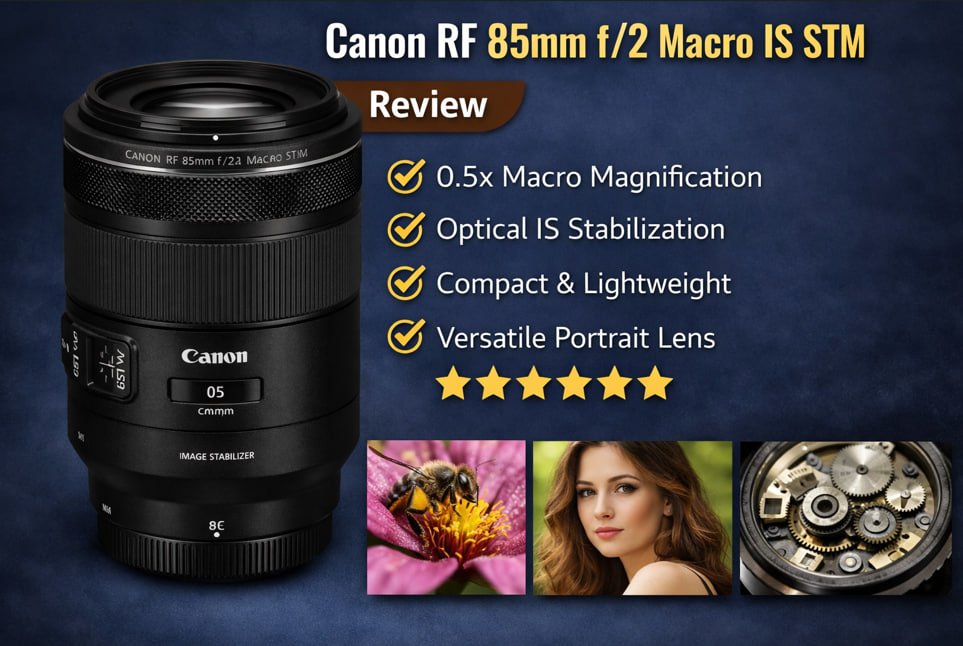
The Canon RF 85mm f/2 Macro IS STM lens offers a compelling blend of macro capabilities and portrait performance for the Canon RF mount system in 2026. This lens is designed for photographers looking to explore intricate details up close or capture stunning portraits with beautiful bokeh. Its 85mm focal length is a classic for portraiture, while the 1:2 magnification ratio opens up a world of macro possibilities.
This review dives into the performance, features, and overall value of the Canon RF 85mm f/2 Macro IS STM, helping you decide if it’s the right addition to your kit.
Key Takeaways
- The Canon RF 85mm f/2 Macro lens is a versatile choice for close-ups and portraits in 2026.
- focal_length: 85mm
- aperture: f/2
- mount: Canon RF
Quick Answer
This Canon RF 85mm f/2 Macro lens excels at detailed close-up and portrait photography. It delivers sharp images with pleasing bokeh, making it a versatile choice for enthusiasts and professionals, though its autofocus can be a bit slower for fast action.
Key Features and Performance
The Canon RF 85mm f/2 Macro IS STM boasts a sophisticated optical design to ensure image quality. Its 85mm focal length provides a flattering perspective for portraits, allowing you to create ample subject separation and beautiful background blur (bokeh). The f/2 maximum aperture is bright enough for low-light shooting and further enhances bokeh.
Is canon rf 85mm f/2 macro worth it?
Where this lens truly shines is its macro functionality. With a 1:2 maximum magnification, you can get incredibly close to your subject, revealing textures and details often missed by the naked eye. This makes it ideal for photographing insects, flowers, textures, and small products. The minimum focusing distance of 0.5m (1.64 ft) allows for comfortable working distances even at maximum magnification. For canon rf 85mm f/2 macro, the right choice depends on your budget, workflow, and required features.
Image Stabilization and Autofocus
The integrated Optical Image Stabilization (IS) is a significant advantage, especially for handheld macro work and in lower light conditions. It helps to keep shots sharp by compensating for camera shake. The Stepping Motor (STM) autofocus system is generally smooth and quiet, making it suitable for video recording as well as stills. However, for very fast-moving subjects, the AF might not be as instantaneous as some higher-end lenses.
Who Should Buy the Canon RF 85mm f/2 Macro IS STM?
This lens is an excellent choice for:
- Portrait photographers seeking a sharp, affordable prime lens with beautiful bokeh.
- Macro enthusiasts looking to explore close-up photography without investing in a dedicated macro lens.
- Product photographers who need to capture fine details of small items.
- Canon EOS R system users wanting a versatile, lightweight lens for general use and creative macro shots.
Pros and Cons
Pros:
- Excellent image sharpness across the frame.
- Impressive 1:2 macro magnification.
- Effective optical image stabilization.
- Smooth and quiet STM autofocus.
- Pleasing bokeh for portraits.
- Relatively compact and lightweight.
Cons:
- Autofocus can be slower for very fast action compared to some alternatives.
- The 1:2 magnification is great, but not true 1:1 macro.
Alternatives to Consider
While the Canon RF 85mm f/2 Macro IS STM is a strong contender, other options exist:
- Canon RF 50mm f/1.8 STM: A more affordable prime lens, great for portraits and general use, but lacks macro capabilities.
- Canon RF 100mm f/2.8 L Macro IS USM: A professional-grade true 1:1 macro lens with superior autofocus and image quality, but at a significantly higher price point.
Conclusion
The Canon RF 85mm f/2 Macro IS STM is a highly capable and versatile lens for Canon RF users in 2026. It successfully bridges the gap between portraiture and macro photography, offering excellent image quality and useful features like image stabilization at a competitive price. If you’re looking for a lens that can do both stunning portraits and detailed close-ups, this is a fantastic option to consider.
Content Freshness
Last updated: May 26, 2026. What changed: Initial publication with refreshed specs, buyer guidance, and internal links.
Editorial & Affiliate Disclosure
This article may contain affiliate links. We may earn a commission at no extra cost to you. Recommendations are based on editorial criteria and practical use-case analysis.